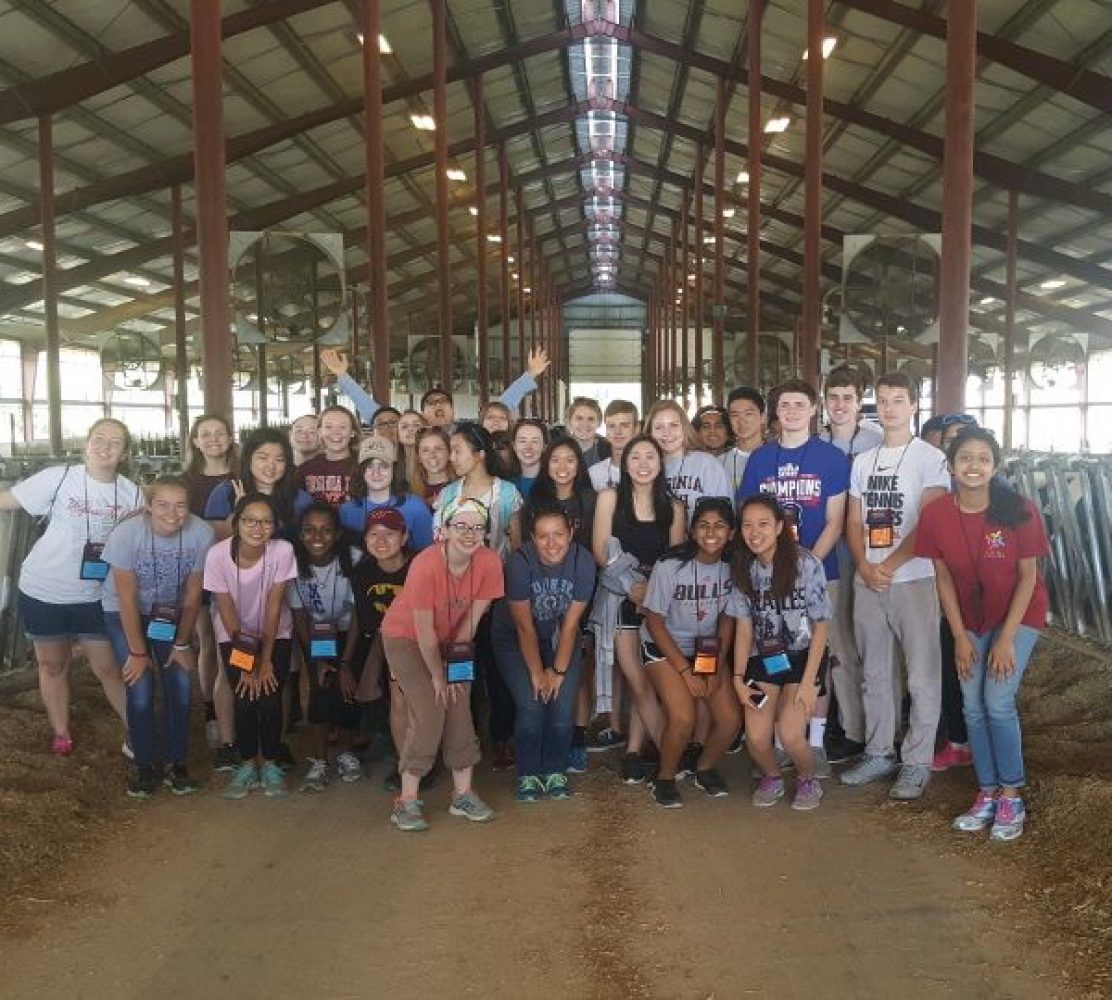

By: Seena Hornarvar, Joyce Kuo, Monika Grabowska, Lucia Lu, and Alison Bryant
The third week has begun at the Virginia Governor’s school for Agriculture, and the students are now taking courses in their various majors: Plant Science, Animal Science, Agricultural Engineering, Agricultural Economics, and Food Science.
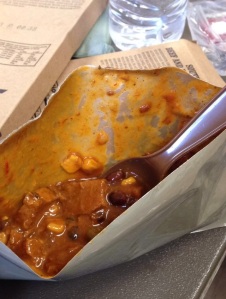 temperature for fully-cooked hamburger meat is 160 degrees Fahrenheit. Students also had a chance to eat MREs, or Meals Ready to Eat, that are given to U.S. soldiers in the field. These unassuming brown bags actually carry a full meal, encompassing side dishes, a main course, beverages, and snacks such as skittles or beef jerky. These meals have a shelf-life of four years due to the use of preservatives and salt to maintain freshness. Although these meals come unheated, they provide you with a heating pouch that contains chemicals inside that react with water. By simply pouring a little water in the plastic pouch, heat is created, and soldiers can place the pouches containing their main course meals into the heated pouch and “microwave” their food. Thanks to food science, soldiers can enjoy a hot meal anywhere in the world.
Not only did the economics class veer into gender roles, but earlier the class even discussed the collapse of 2008. Quickly, the students moved from simple supply and demand to the complex workings of the economy with its subprime loans, securities, and stock crashes. But even despite quickly varying topics with different implications, Dr. Mike Ellerbrock handled the topics with excellence and related them back to economics. Economics definitely is everywhere.
Agricultural Engineering
In Engineering, students visited the nearby Stroubles Creek to learn about Biological Systems Engineering (BSE) at
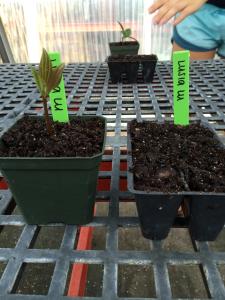 Virginia Tech. The BSE team is currently researching the sources and consequences of water pollution at the stream, which is not the cleanest. Students gained a better understanding of how water quality is determined and how it can be improved, learning about Best Management Practices (BMPs) to control water pollution and Total Maximum Daily Loads (TMDLs) to calculate the maximum amount of pollution that can enter a body of water before it is declared impaired. Today, the students were able to take water samples from the stream to test for microbes, as well as to measure dissolved oxygen concentrations in the stream. They also helped plant a tree close to the stream to act as a buffer against runoff and erosion. Tomorrow, they will analyze the results from these tests.
This week in Animal Science has been a blast! everyone in the major has had the opportunity to get up close and (very) personal with the horses and cattle that are located on Virginia Tech’s campus. The first day everyone was able to have a chance to get an in depth look into the reproductive system of a cow and sow. After, we were able to get a look at what the rest of
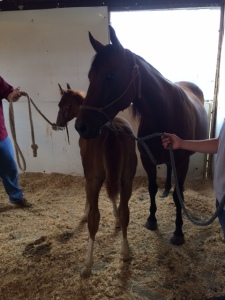 the week had in store for us! The next day we made our way to the horse ranch and gathered up in the loft of the barn to watch the handlers collect a stallion. We were able to watch how they teased the mare and stallion and the process that they used to safely collect the stallion without injuring him or the handlers. The process went by quick and easy, and within a few minutes one of the handlers set up a slide from the collection and we were able to take turns looking into the microscope. Wednesday, everyone went over to the beef cattle farm and certain volunteers from the group had the opportunity to try and herd one of the steers away from the herd. A couple of other volunteers were able to check the temperature and the heart rate of one of the steers that was herded into the chute. On Thursday, the group went back to the beef cattle farm and were taught how to identify different body types of the steers they had and we also had the chance to watch an ultrasound be performed on a steer. The whole process that they did was incredibly interesting and we could see exactly how big or small the rib-eye would be on that certain steer.
 Governor's School for Agriculture