Teenagers and the Principle of Comparative Advantage

As teenagers who are sorting out and deciding what we want to do with our lives, it can be hard to pinpoint one passion to pursue. There are plenty of choices to make regarding going to college or joining the workforce, what to major in or what work field to chose, and what school or job is the best fit for you. It is hard to pick between what we know we enjoy and what could support our long-term.

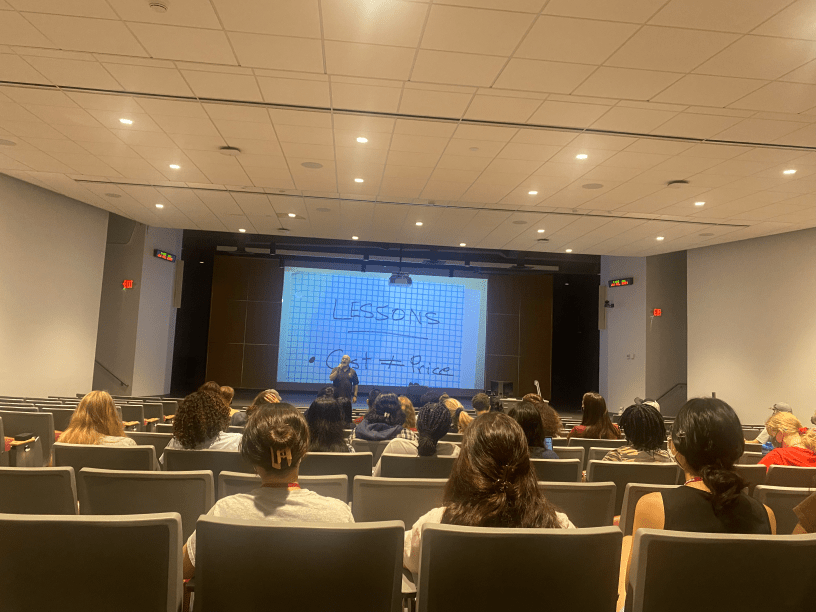
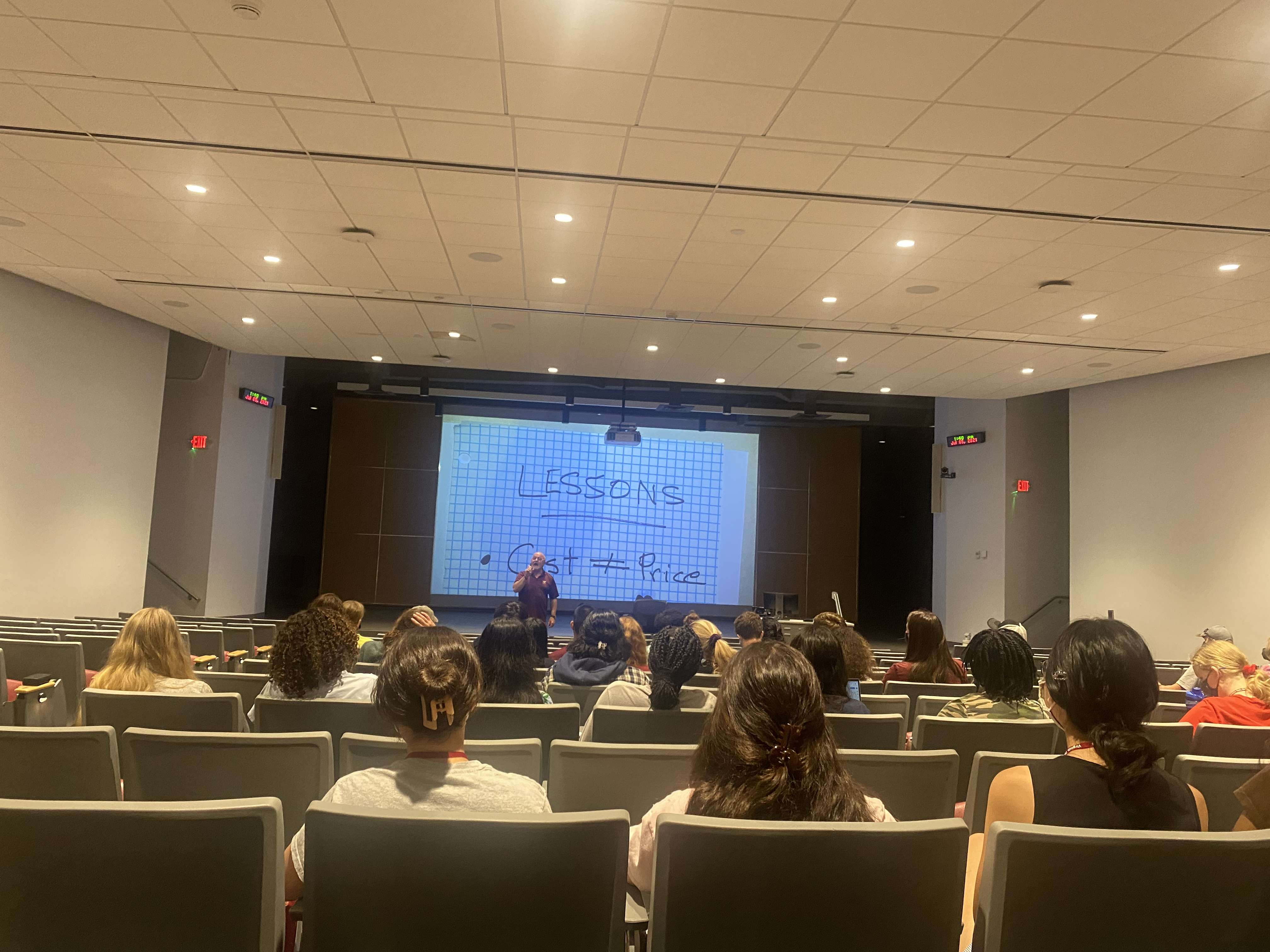
Today in our economics class, Mike Ellerbrock told us something that puts into perspective the upcoming decisions we have to make regarding our future. He taught us about the Principle of Comparative Advantage.

At first, when he said this, I sat there confused. I didn’t understand where our passions and future jobs came into play. Then he explained the difference between absolute advantage and comparative advantage. Absolute advantage is what you do best by yourself, and comparative advantage is what you do best compared to the competition.

Mike’s example was Mike Vick. For his example with Mike, he said, “You are a football coach who has Mike Vick, an A+ quarterback on your team. He was made to be a quarterback. The only person on your team who is a good receiver is also Mike Vick. Your backup quarterback is a solid B quarterback. And lastly, your goal as a coach is to win as many football games as you can. Who do you put as your quarterback?” The answer was the B-grade backup quarterback. In the end, although Mike Vick is the best quarterback this coach has ever seen; in order for his team to win, Mike Vick has to play wide receiver. His absolute advantage is being a quarterback, but his comparative advantage is being a wide receiver in this scenario.

Mike ties this into how we will decide what to major in, what workforce to go into, and what passions we will pursue throughout our lives. We have to think about our comparative advantage versus our absolute advantage. Our passions in life that we grew up on may not financially support us, and we might have to pursue something else until we have the means to go back to our absolute advantage. In the end, economics can help us realize what to pursue at the moment or which direction we should take with our futures’.

-mm
Communication in Ag: Beyond Semicolons and APA Citations

When we first arrived at GSA, we were faced with many new things: new places, new people, new routines, new freedoms, new responsibilities, new ideas, new experiences. It was clear from the beginning—GSA is a place of opportunity for learning and growth. 

One important focus of GSA is to develop skills in agriculture communication. To improve our communication skills, we have attended lectures about both academic writing and storytelling, and we have tried our hand at it with research papers and blog posts. However, our communication education has gone deeper than lessons about semicolons, neural coupling, and APA citations; with each lecture, activity, and discussion, different styles of agricultural communication are modeled to us through the teaching styles of our various professors.

Agricultural sciences professor Tim Durham made his lessons on soil applicable and relevant through both sharing his own experiences on his family farm as well as involving us in conducting our own web soil surveys of places that are personally significant to us.

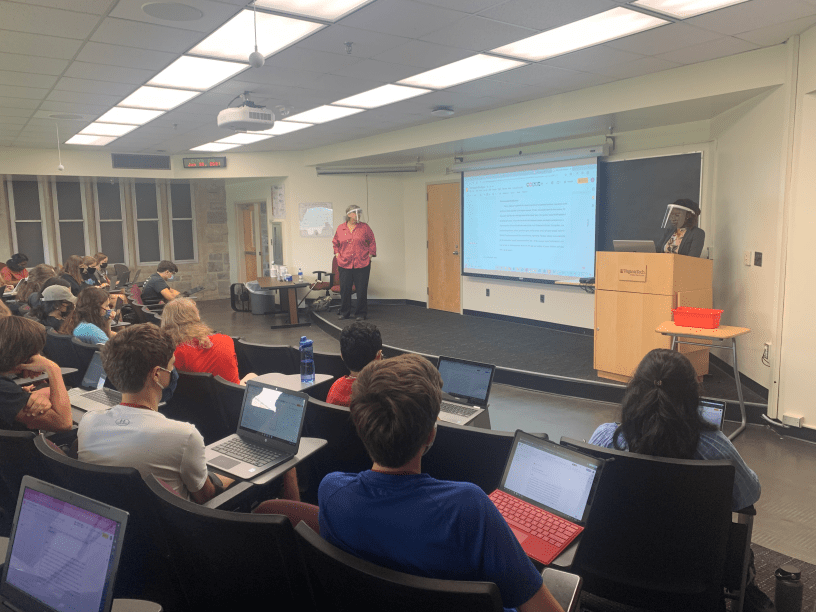
Agriculture leadership professors Jama Coartney and Nichole Nunoo brought their communications lectures alive with their joy, personality, and collaboration. The way they related to the students and each other made the class enjoyable and interesting.

Jama Coartney and Nicole Nunoo review a writing activity.

Genomics professor David Haak took us to see the equipment that he uses for his own research, including mass spectrometers and a variety of different drones. By giving us a glimpse of graduate- and faculty-level research, he encouraged us to seek out research opportunities, even during our high school and undergraduate years.

Economics professor Mike Ellerbrock intrigued and involved the entire class in a thought-provoking discussion about practical and theoretical economics that made even “the dismal science”—a label he shared with sighs—fascinating and very applicable to our own lives and to the world.

Overall, the entire experience of GSA is shaping us into better science communicators. In addition to all that we are learning through the curriculum, every professor is a living example of what it means to convey information about agriculture in an effective and engaging manner. I have learned that scientific communication is more than the mere transfer of facts and concepts from one brain to another; rather, it is the art of lighting a spark that ignites the receiving mind to grow in its own comprehension of and curiosity about this wonderful world we live in.

-el

The Future of Agriculture Technology

With thin rotor blades stretching out on carbon fiber arms from a mass-efficient core, the heavy lift drone stood in front of us majestically, as if waiting for its act in the talent show. I had witnessed drones in flight before, but nothing of this size: less than a pound under the maximum weight of 55 pounds for drones to be allowed to fly under the Unmanned Aircraft Systems (UAS) regulations. The research being conducted with this drone, however, was even more fascinating than its technical specifications.

Precision agriculture—or the treatment of only the few most needy areas with pesticides, water, or any other nutrient—seems an obvious method to more efficient farming. However, it requires highly advanced instruments to take and transfer accurate measurements for treatment in specific locations. Along with a smaller drone capable of creating bird’s eye view images of crops or turf grass fields, this heavy lift drone was being tested as a more efficient way of distributing chemical solutions across large areas.

As we watched the drone lift off slowly with the rotor blades beginning to pick up speed, dust was pushed away from underneath it with great force. The drone rose at a constant speed until reaching about 30ft above the ground. Then, as it made its way across the field to distribute an even coating of water, we all stood in awe at the future of agriculture’s amazing technology.

Scholars look to the sky to watch a drone demonstration at Kentland Farms.

The View from Above

Gardening in our family plot was always something I enjoyed. Whether it was planting the seeds, watering the plants, or even picking out the weeds, I was always excited to garden. This love for gardening is what spurred me on to apply to Summer Residential Governor’s School for Agriculture. However, a main problem that I always wondered about when gardening at home was how one could actively track the terrain and agriculture from a higher view than one could see only on the ground.

Gov School Students learning about the usage of drones in the turfgrass industry.

This problem was solved by the work of many, including Dr. David Haak, and many PhD students, who were able to investigate this phenomenon by beginning to develop drones, which have the ability to take pictures of farmland and place these images together to create a uniform model of the features of the land they study. The building and investigating of technologies like these not only involve an adequate understanding of agriculture, but also demand computer science and biochemistry knowledge.

With these complete images, farmers would then have the ability to discover ways to improve the health of their crops through changing their soil composition or even adding new forms of pesticides. Although these drones might not be a feasible option for tracking the terrain and agriculture of my family garden, as this technology is highly costly, drones could serve as an important tool for aiding farmers in the future.

-rb