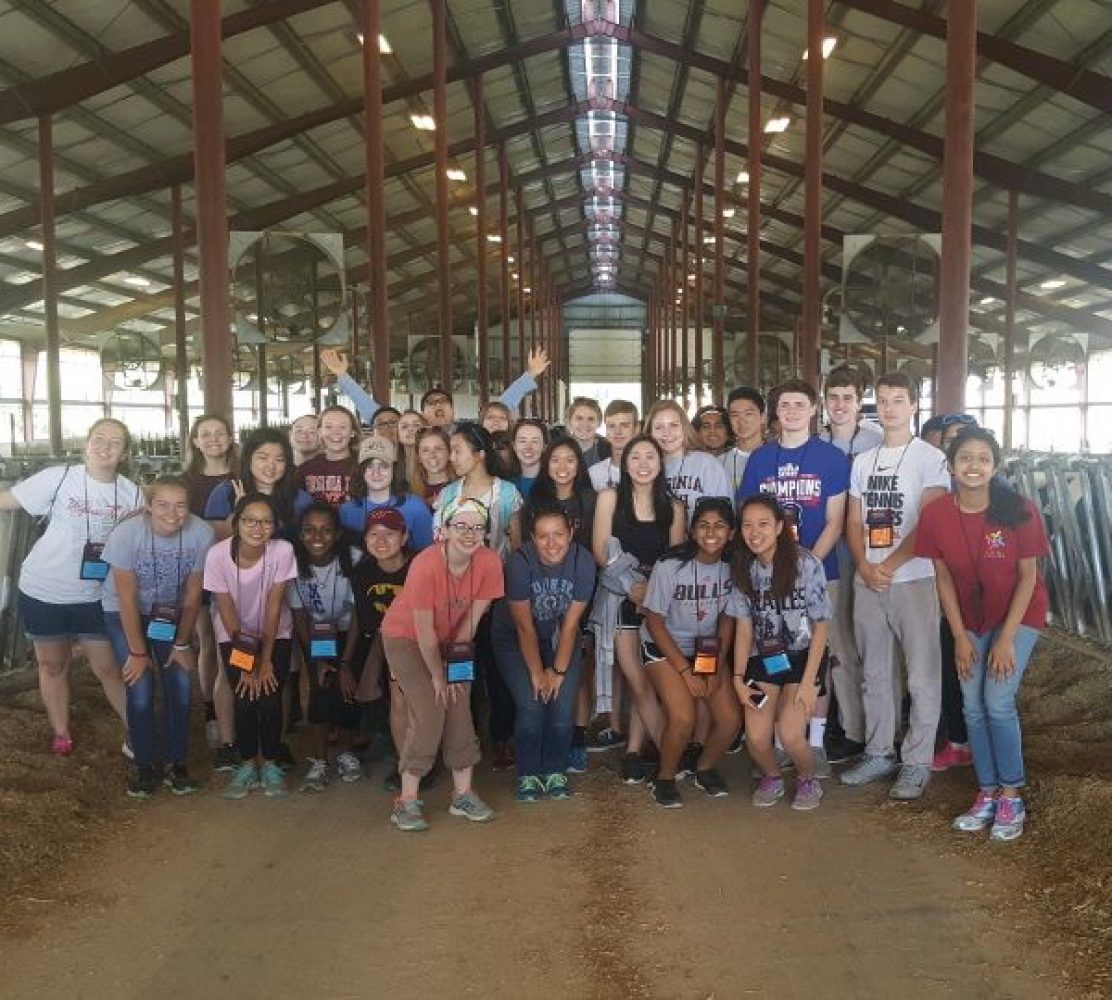

There I was on the first week of GSA, foreign to my environment, and eager to educate myself on the depths of agriculture, all until the first class on the schedule read soil, simply soil. Yes, I expected some teachings relevant to the ground, but what could have been so special about the “dirt” beneath our feet to be taught for a week? As the hill of optimism became steeper, curiosity grew out of the box. What I considered lowly of dirt, became of quality as soil, and more importantly an answer to our environmental challenges.
Whether you believe in it or not, climate change is happening, and it is largely due to the excessive amounts of carbon dioxide within the air. As a society, one of the greatest challenges we face is that carbon dioxide levels are increasing by a little over two parts per million each year. While Dr.Tim Durham, our professor, described the dangers of the rapidly increasing carbon dioxide within our atmosphere, my mind had been encompassed by questions for a solution: how can we get this carbon back? It was us humans who made the mistake, will there ever be a way to reverse it? As my brain deliberately pondered, scavenging for an ultimate solution, my ears had grasped on dearly to one of Tim’s presented solutions: carbon sequestration in soil; the very process of capturing and storing atmospheric carbon dioxide beneath the surface. So there is a way, but we don’t know how to maximize this method for the greatest benefit.
The very next day irony struck; my group was assigned a prompt asking to figure out the best methods of carbon sequestration over grasslands and pastures. The research began and discussions generated numerous solutions. From planting native species with deep roots systems to genetically modifying the plants and soil for optimal absorbance, we discussed it all. Our ideas seem boundless, but economics must play its part. If there was one message I could relay to society, it would be one of cooperation, that Earth’s health does not lie only with agriculturalists or the federal government, but with every soul capable of making a change, of lending a hand for the better difference.
-kb
 Governor's School for Agriculture