Soils. A Riveting Subject?

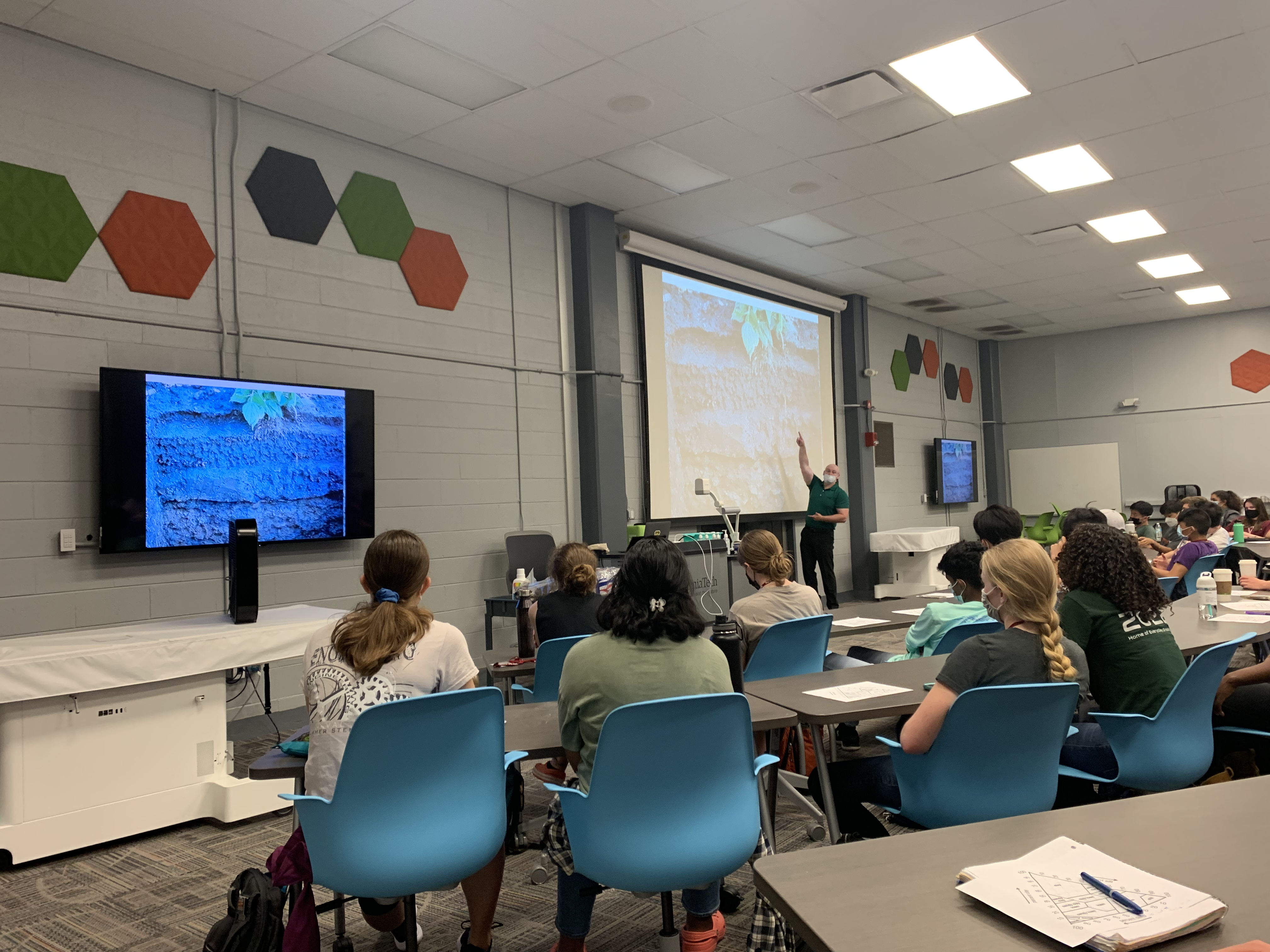
I don’t think anyone knew what to expect when we walked into our first real ag class. Soils? Really? Not the most riveting subject. However,  Professor Tim Durham’s soils classes proved to be amazing. Tim gave ecstatic lectures about soils, and gave us a foundational knowledge of agriculture. Not only did he teach us about soil, but also about sustainability in agriculture. His engaging lecture with references to different books and movies as well as asking questions to the class made all of us think about the future of sustainable agriculture. About a week later when we went to Kentland farms and they had a black plastic mulch to prevent weeds from growing, I immediately wondered what Tim would think. So, I searched him up, found his contact info, and sent him an email. I also asked him for his max bench, as a way of getting the conversation started. After a day of checking my email every 10 minutes, I got a response from the professor. 
To be honest, I was a bit surprised to find a full page of information on this technique, called plasticulture. I learned that black plastic can heat the soil and allow for an earlier planting, clear plastic can sterilize the soil before planting, and colored plastics like red plastic can increase yield on certain crops. However, it was clear Tim wasn’t for it. Farmers have to manually replace the plastic every year because it photodegrades (frays and breaks) under the sunlight. Runoff deposits microplastics in the soil. Any bits of plastic accidentally left can gum up machines. Incredible amount of plastic waste and huge investment of time. Biodegradable options have worse in-field properties. Tim thus made it quite clear that plasticulture wasn’t the future, despite its effectiveness. With a 325lb bench press, Tim definitely inspired us to raise the bar and work towards a more sustainable future.

Grateful for the Memories

It was orientation day and everyone looked exhausted from the long car ride here to Virginia Tech. We were all gathered at Litton Reeves auditorium to begin our orientation. As I looked around at my future roommates, classmates, and friends, I noticed the significant decrease in people from the previous Governor Schools I had seen. I began counting the number of heads in the audience, whispering it quietly in order to have an accurate count. Fifty people. It is an astonishing low number compared to the other Governor’s School programs that had a hundred plus people. With such little numbers, I wondered if I could even create any friends here.

I spent most of my time with the friends that had been accepted into Governor’s School with me which amounted to a friend group of four. In the first week, I would gravitate to the usual four, not making the effort to make any lasting friendships as I thought, “What was the point, I’m only here for a month”. We would do the activities together, sit together in our lectures, and I even had one of my close friends in my global seminar group. It was a perfect scenario for me, as Governor School was never thought to be a fun program for me as Agriculture reminded me of farming and animals, which I could easily achieve in Minecraft.

However, I was completely wrong, as the weekend activities progressed and I was inevitably introduced to several people here, I made friendships and memories that would last a lifetime. The daily volleyball two versus two we would play in the prairie quad and the short third floor lounge breaks that seemed so meaningless was my favorite routine and pastime here. Governor’ School for Agriculture was the most worthwhile summer program I could do and I am eternally grateful for the memories.

Diversity in Agriculture

“Bring diversity back to agriculture. That’s what made it work in the first place.” This quote was said by prominent environmentalist David Ross Brower founder of many environmental organizations. Many assume this quote like most quotes on “diversity in agriculture” refers to planting a variety of different crops for healthy soil; however, in actuality Brower was referring to employing a variety of people for a healthy and sustainable industry. There is a widespread perception that agriculture is comprised of and belongs to white men on large farms; however, this is only a small group that makes up the agriculture industry as a whole.

I had the fortune of being exposed to agriculture at an early age and fell in love with every aspect of the field, yet I always felt as though there was no place for me because I was not white or a man and I had never lived on a farm. While I refused to let these doubts persuade me from my aspirations countless others have thrown their dreams away because they didn’t feel they “belonged”. 

Throughout the month professors told us of the quickly changing demographics in all aspects of agriculture making a large dent in the issue of minority representation in the industry. We learned that women are beginning to dominate plant sciences and African Americans are becoming increasingly more engaged in agriculture. My hope is that in future years the agriculture will represent all those who fall in love with it just as David Brower and I did.

-mb

Bovines and Hands-On Experience

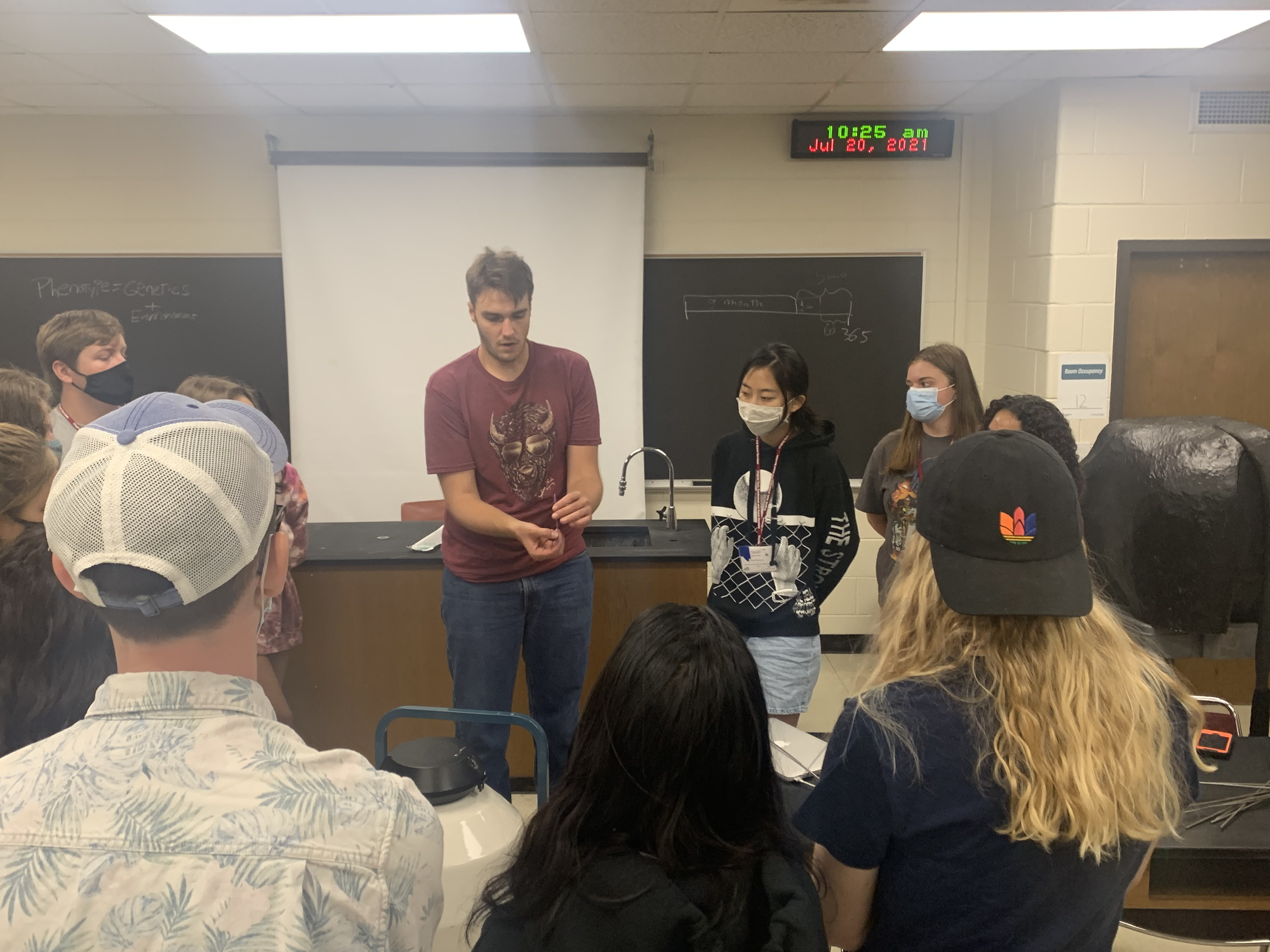
Out of all the things I would learn about at Governor’s School, I didn’t think bovine reproduction would be one of them. After standing in the pungent smell at the dairy farm, I couldn’t think of going through anything more gross. I nervously waited all week for elective courses to begin, and I wasn’t really looking forward to my bovine reproduction class.

I walked into the lab on the first day, and the walls were decorated with cow skeletons, models of organs, and anatomic charts. I didn’t think there was enough to learn about cows to have a whole lab dedicated to them. As the teacher went through the slides in his presentation, all of a sudden, bovine reproduction got more and more interesting to me. Being able to look at it from a scientific standpoint really helped me get through any fears or anxieties I had about the class.

We later got to perform dissections, look at ultrasound images, and use models to demonstrate certain procedures and reproductive technologies that are used with cows. I thought the hands-on aspect of the class would be the worst part, but it actually ended up being my favorite part. Tomorrow, we’re going to Kentland Farms to check for pregnancies in real cows, and even though I still feel nervous, I couldn’t be more excited!