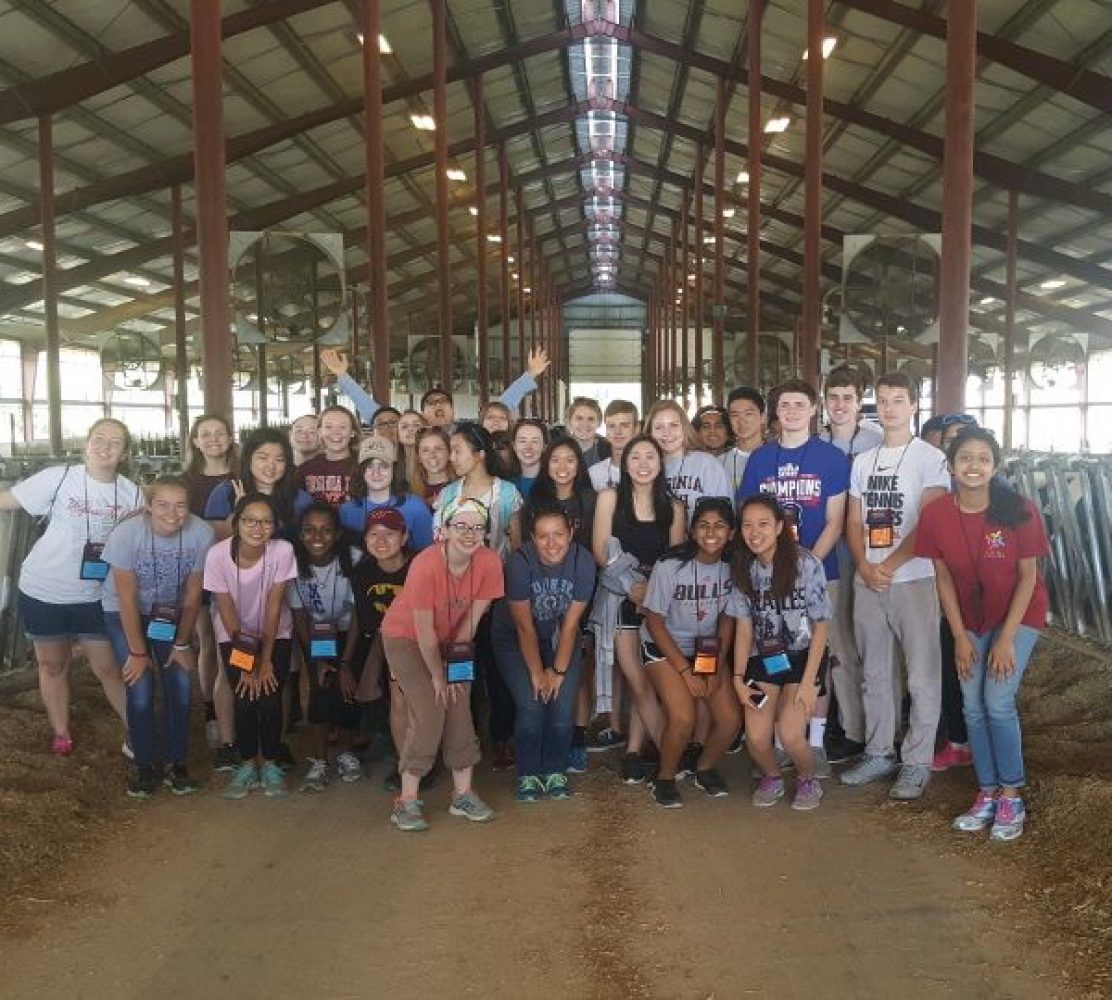

By: Kavya Iyer, Janessa Jiang, Hannah Kim, Chelsea Le Sage
Intro to Electives
By: Kavya Iyer
This week, the Governor’s School students had the opportunity to discover another  characteristic of college, choosing minors. These classes were intended for students to understand and entertain their interests in other fields of agriculture besides those chosen from their major. Some of the electives were
  Aesthetic Horticulture, Animal Reproduction, Aquaculture, and Problem Solving. These were considered as the ‘minors’ and were primarily meant for students to pick topics that interested them for fun, hands-on activities. The Horticulture students made beautiful flower arrangements and the reproduction class learned and dissected organ systems. Most students got to visit the beautiful Hahn Horticulture Gardens, where there was a koi pond and a small, but aesthetic waterfall lush with foliage.
(Images by Kavya Iyer in Hahn Horticulture Garden)
All About Aquaculture
By: Hannah Kim
Aquaculture is defined as the breeding, rearing, and harvesting of plants and animals in all types of water environments including ponds, rivers, lakes, and the ocean. In the fast paced 21st century, trying to placate the rapidly growing population continues to be a problem that the 21st century population must find a solution to. Aquaculture also includes a system known as stock restoration or “enhancement” which is a form of aquaculture in which fish and shellfish are released into the wild to rebuild wild populations or coastal habitats. Aquaculture in the United States refers to not just seafood supply but also refers to restoring habitats at-risk species. Currently, Aquaculture is constantly changing based on consumer trends. While fishing can be devastating to the environment, aquaculture, if done correctly can be beneficial to the ecosystem by supplying product but also by keeping the surrounding environment safe. Aquaculture will be a sustainable and reliable source of seafood for years to come.


https://www.youtube.com/watch?v=3Oi9GARr-Xc
Above, please find a short video about US Aquaculture
Petal to the Metal
By: Chelsea Le Sage
In preparation of the upcoming Governor’s School Banquet, twenty students selected aesthetic horticulture as an elective course. Within the three day period each student learned the proper care and techniques of flower displays, demonstrating his or her knowledge with a final mound bouquet arrangement. Not only did this course offer insight to a career in the agricultural field, but emphasized the knowledge, harmony, time, and craftsmanship put forth in every flower arrangement. For many students this was their first time being exposed to aesthetic horticulture, which generated an even deeper appreciation of the art.
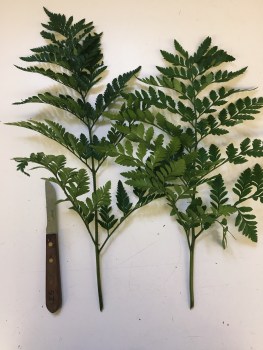
Image one: Learning to cut the stems of foliage and flowers
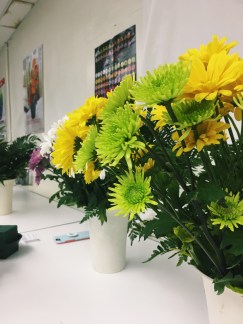
Image two: Flower selection for bouquets
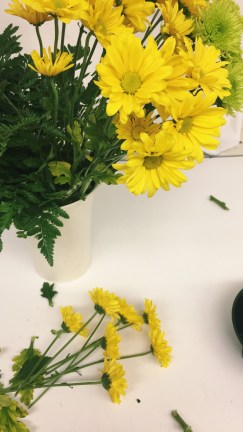
Image three: Trimming and placing flowers

Image four: Final product
Images by Chelsea Le Sage
By: Janessa Jiang
Although the course, Aesthetic Horticulture, is meant to be a semester-long class, we were able to learn the basics and create our own flower arrangement in the three-day period. On the first day, the principles of design and elements of design were introduced. With this knowledge, we evaluated different flower arrangements in categories such as color, texture, shape, and balance. While the first day of the course was focused on exposure to the topic and basic knowledge, the second day of the course shed light on the different applications and techniques used in flower arranging. Foliage was provided to give the students a hands-on experience with plants, specifically how to trim the stems. After choosing our flowers, the third day of the course was spent on creating our own flower arrangements that are going to be displayed at the GSA banquet at the end of the week.
Overall, the last week provided students with new perspectives in areas of agriculture different from their major courses. The elective courses were a great way to end the memorable four weeks at Virginia Tech. 🙂
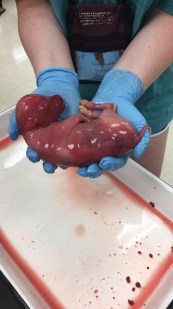 We were given a tray, a razor, and the placenta of the cow. What happened next? We made precise cuts on the outer placenta and out spilled the amniotic fluid! After draining the fluid from the placenta, we located the fetus with its umbilical cord attached, nestled in the amniotic sac with caruncles surrounding it. We had an udderly good time!
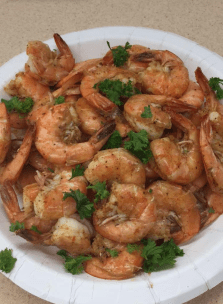 listened to lectures describing the seafood industry, the anatomy of fish, and the science of raising healthy fish intended for eventual human consumption. The students each dissected a full trout in order to learn about the different organs such as the stomach, pyloric caeca, liver, and swim bladder. On the final day, they cooked mussels and shrimp as an exercise to learn about proper handling of seafood to prevent foodborne illness. Unfortunately, so many of the mussels were dead prior to cooking that they were deemed too risky to eat for fear of contracting foodborne illness. However, the students still enjoyed cooking both foods and enjoyed a delicious meal of steamed shrimp flavored with garlic, parsley, cajun seasoning and chesapeake bay seasoning. The food was shrimp-ly marvelous!
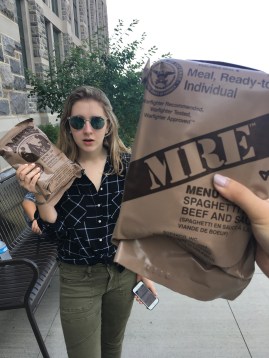 apprehensively towards a table piled high with brown packages. After spending the week listening to Dr. Joe Eifert lecture on Meals Ready-to-Eat (MREs), it was time to try the military rations packets for ourselves. MREs are totally self-contained complete meals as well as the main operation food ration for the U.S. Armed Forces. Each and every menu item has been extensively studied by food scientists and averages 1,250 calories per package containing the
 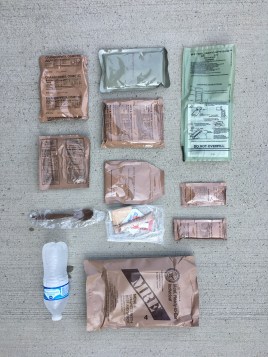 optimal balance of protein, fat, and carbohydrates to keep our armed forces in prime health.
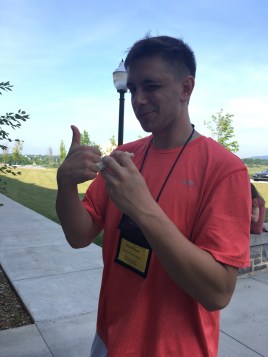 Students were also given the opportunity to sample each other’s foods. Dan, pictured in the third image, went around sampling everyone’s packages and as you can see, he approved of the MRE meals! Overall, we enjoyed our experience and have a newfound appreciation for D2 dining. We have also developed a lot of respect for our soldiers and thank them for their service to our beautiful country.
 Governor's School for Agriculture