
Fighting Hunger With Science

1

According to The United Nations Children’s Fund, one person dies of starvation every 3.6 seconds. Genetically modified food can help stop starvation in third world countries and here in the United States due to their ability to produce more, grow in places that do not normally suit agriculture, and have special nutritional qualities.

The FDA defines genetically modified organisms, more commonly known as GMOs, as organisms that have been introduced to new traits or characteristics by means of genetic engineering.

Enjoy this funny video on defining GMOs: https://www.youtube.com/watch?v=EzEr23XJwFY

Farmers have been performing gene selection for hundreds of years to increase crop potential.  Now, cutting-edge technology called genetic
engineering can be used to produce superior crops. Genetic engineering began in the 1990’s and is currently monitored and regulated by the Food and Drug Administration. GMOs hold many new and exciting opportunities in the world of agriculture.

Genetic modification is technique farmers can use that produces consistent end results. One study conducted by independent companies came to the conclusion that, on average, genetically engineered crops have increased genetically-modified-crops-and-food-securityscientific-facts-3-638yields at or above 22%. These studies have shown that use of GMO varieties of cotton and corn in developing countries increased the yield per
acre by more than 50%. GMOs have also contributed significantly to the doubling of soybean production.  The increased crop production provides more food to feed the world.

With specific genetic modifications, GMO crops can be protected from certain pests.  For example, rootworms that feast on the roots of corn can no longer wreak havoc, nor harm or kill the plant.  This gives farmers the ability to harvest more products.  These crops can also prevent yield losses allowing the plant to approach its yield potential.  With the population projected to double by 2050, this is one step in the right direction to help meet the growing demand for food.

Learn more pros and cons of GMOs: https://www.youtube.com/watch?v=aCWH7PlBKBw

With the population increasing there is a decrease in the amount of land available for agricultural production.  Genetically modified crops can allow for growth in places that are considered non arable and useless. These areas may not have ample water or proper soil conditions.  For example, scientists have developed a new tomato plant that is salt resistant.  These crops can produce food in unfavorable conditions which is crucial in fighting against world hunger.

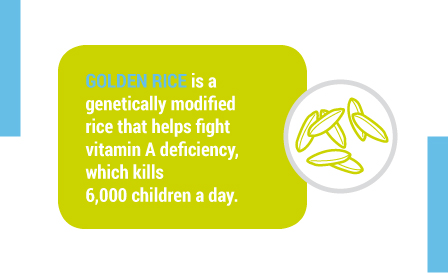
GMO foods can help provide unique nutritional benefits. Rice, a major food in many different countries, does not naturally contain beta-carotene, GoldenRiceotherwise known as Vitamin A. In more recent years, scientists have created a bio-fortified rice variety through recombinant technologies also known as “Golden Rice.”  Due to its higher beta-carotene content, this rice is a propitious development in the battle to reduce malnutrition in third-world countries.
Although, there is much controversy over GMOs today, they are a necessary step to ensure food security now and in the future.  Many people believe that these organisms are not safe to consume, yet hundreds of studies have proven otherwise.  With the help of genetically modified
organisms, food will be able to have higher yields, better growing abilities, and new nutritional advantages to help provide meals for everyone.

See http://gmoanswer.org/ for more information about GMOs. If you would really like to get more into the GMO controversy please watch this video.  https://www.youtube.com/watch?v=mz4_TwdaYeI 

Written by: Ashton Duncan, Leah Jenkins,Tess Seibel
So California Hasn’t Had Rain in a While, What’s the Big Deal?

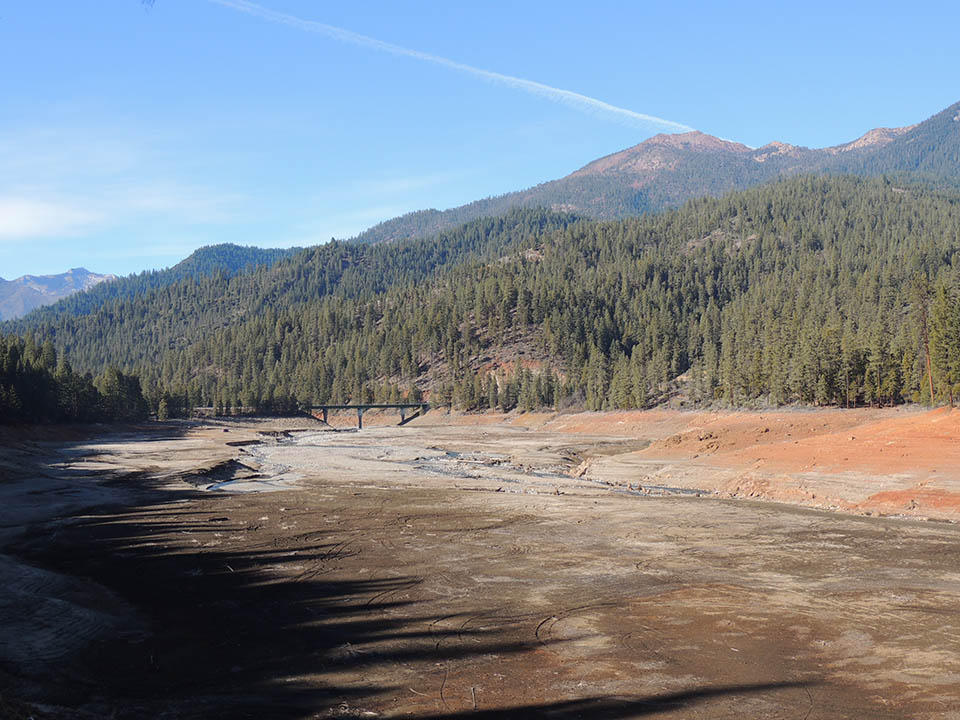
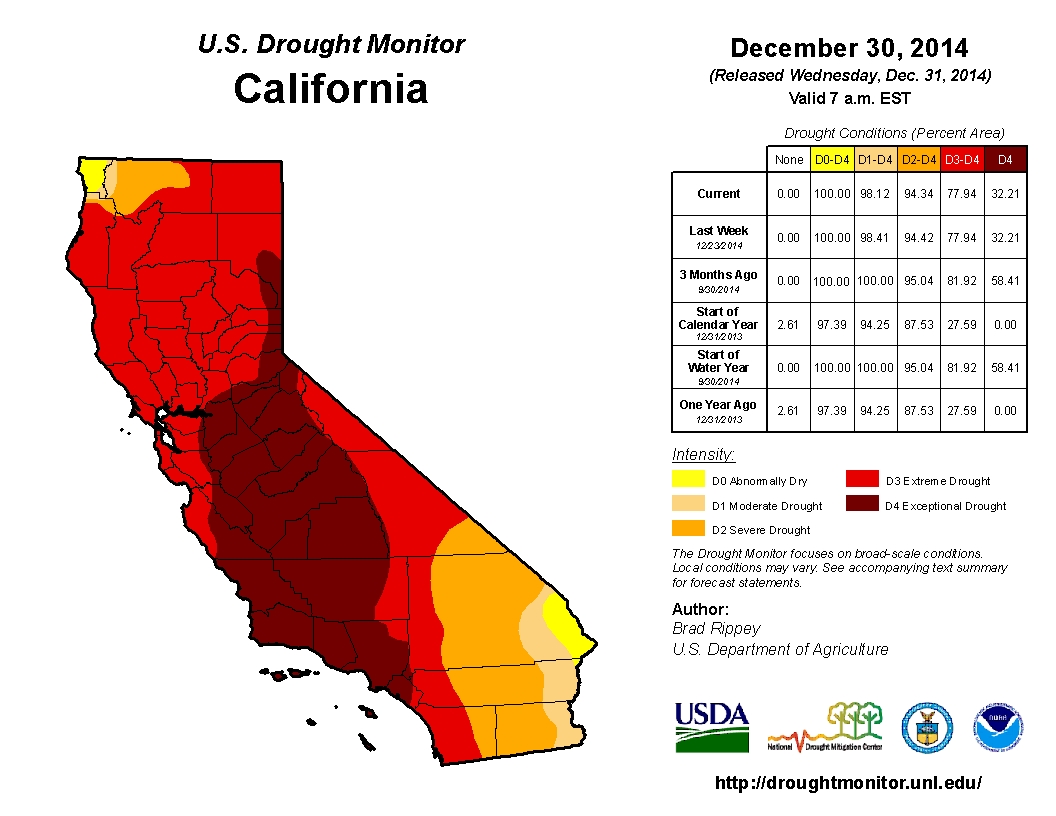
With California’s agriculture production accounting for 15% of the U.S. crop sales, the continuous drought has upset both the economic and social communities. Along with the drought the groundwater levels have declined drastically. Groundwater directly supplies about 30% of the state’s water and about 85% of its drinking water.

#3-1

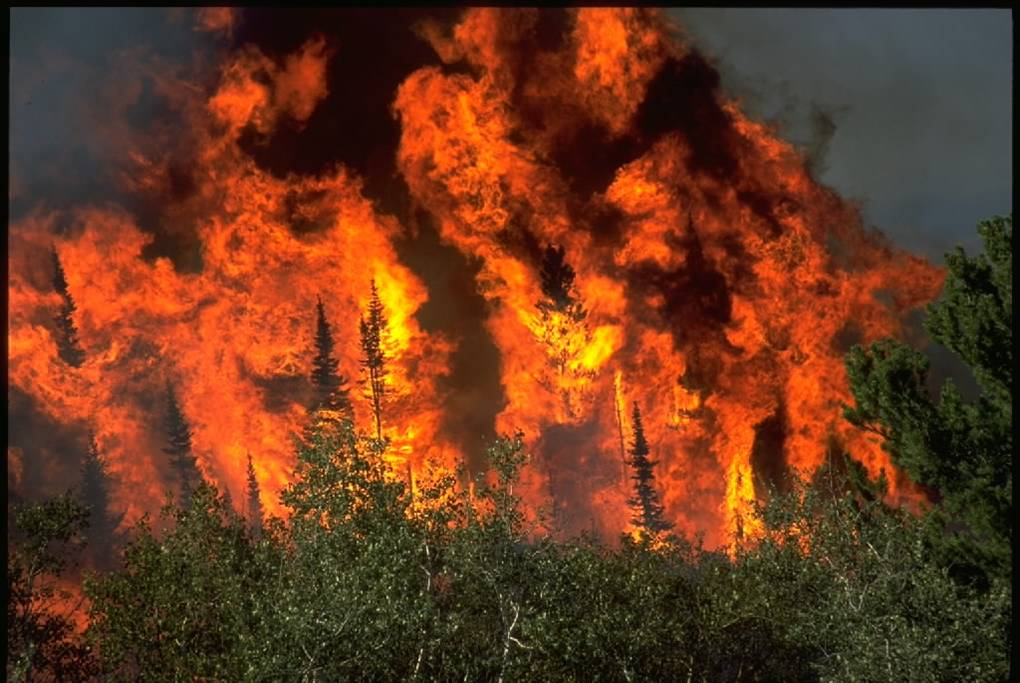
In addition, wildfires are more likely due to the drier hotter climate. Wildfires have many longer term impacts besides burning down many trees and underbrush. They damage homes and other structures in their way causing #3-2harm to people and animals. Increasing wildfires lead to an increase in landslides and floods because the water will not absorb into the charred ground.

The floods and landslides contaminate the already scarce water supply. Due to the scarcity of water, there have been “water-wars,” where citizens wish to draw water from the Delta-Mendota Canal that protects wildlife. The future of this delta’s structure depends on the choices that these citizens make. Authorities must decide how to allocate the evermore scarce sources of water. Water rights are being taken away from farmers, disabling them from producing crops. Along the lines of water supply, communities where residents use more than 165 gallons a day will have to cut their usage by 35%.

Besides the water supply, food supplies have been affected as well. Agriculturally, farmers do not have enough water to cultivate their crops. This threatens the food supply of the United States because as mentioned, California produces about 15% of the nation’s crop sales. The United States trades its goods with other countries and the loss of goods from California will ricochet around the world.

California has had a $40 billion a year farm economy, but they can’t keep up with it because there’s not enough water. California produces 84% of US peaches, 94% of US plums, 99% of US artichokes and 94% of US broccoli, leading the nation in much of its farm exports. No continuous rain has watered Californian lands for the past three years. The dry spells have halted much of Californian farming, taking away a large portion of American farm economy.

A vast zone of increasing pressure over the West Coast is blocking Pacific Storms from coming ashore to California. Instead, it is deflecting them #3-3towards Alaska and British Columbia. High pressure zones are very common to the Pacific Northwest; however, most break down within a month and allow rain to get to California. This particular zone is stubborn and has withstood movement for 13 months. It’s proving to be one of the most persistent and strongest high pressure areas in Californian history.

According to Bob Benjamin, a forecaster for National Weather Service, in Monterrey, “This ridge is sort of a mountain in the atmosphere. In most years, it comes and goes. This year it came and didn’t go.” Meteorologists have predicted unbroken heat soon to be carried by southeastern winds. Several heat waves have brought temperatures that broke 100 degrees Fahrenheit that have evaporated reservoirs.

Written by: Elise Varblow, Alyce Hong, Sara Howell, Hana Komine

Nothing but Net: Fog Catchers in Peru Could Solve the Drought in California

2

Economic instability, insufficient supply, and drought…What do all of these have in common? Water or at least a lack thereof. In the midst of many water problems worldwide people have been searching for solution to the wet issue of inaccessibility. The answers have been living in Peru the whole time. They are called fog catchers. No, not dog catchers, the scary guys who drive down the street who capture cute, fury animals, but fog catchers.  In fact, fog catchers are not even people; they are the water innovation of the future.

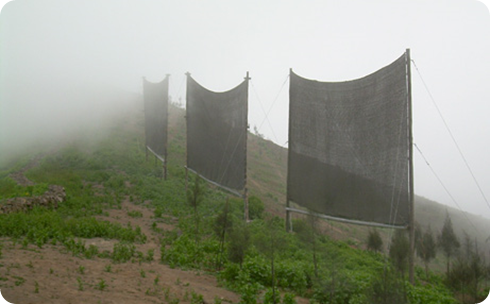
A fog catcher is specialized type equipment designed to trap water droplets from fog in the air. These catchers are typically made from metal, wood, or bamboo as the posts, and mesh for the actual net. When the mesh net captures the fog, the water drops from the mist roll down and are sent through PVC gutters to an organic filter and then finally to a tank or barrel for storage. These innovative and relatively cheap machines enable dry areas to obtain water.  Fog catchers take advantage of the fog that rolls in from the coast in areas like the mountainous Peruvian desert.  The water collected from the fog catchers are typically used for irrigation because the water harvested is not safe to consume. Due to this technology, many Peruvian farmers no longer have to struggle with their crop production amidst a major drought or other environmental obstacles.

Fog catchers are amazingly efficient at producing water. One fog catcher can produce fifty to one hundred fifty liters of water daily per household. Deserted, Lima in Peru has only four centimeters or less rainfall annually. However, since Lima is also known to be humid, up to ninety-eight percent, fog catchers are the perfect way to supply water. They are also easy to build and cost roughly around five hundred dollars each. Although the water produced from fog catchers is not drinkable, it is used for agricultural purposes and making beer. There is currently a project going on in Lima, which goal is to have 1,000 fog catchers that would capture 200,000 to 400,000 liters of water per day. These fog catchers potentially could be used throughout the world, which hopefully solves the problem with water security.

Currently in the United States, California is suffering from one of the worst droughts in history. From 2013 to now, California has not averaged more than four inches of rainfall per year (similar to the conditions of Peru). This 1scarcity of water has the potential to cause great agricultural and economic devastation. Produce is increasing in price, farmers are losing their money and, of course, water is getting more expensive. Some scientists even believe that if the drought continues on, California will deplete its water resources within a year. This emergency requires people to be innovative in finding new sources of water and fog catchers could be solution to their problem.  Just like in Peru, California should implement fog catchers to help with the current drought.

If you are interested in learning more, watch the video and check out the links we have attached below!

Video: https://www.youtube.com/watch?v=b8TBdrzemiM

Written by: Hannah Aronson, Yeonji Kim, Alex Springer, Kathy Tao

What the Frack is With All This Fracking?

The issue that concerns almost every single American is gas.  Not the gas that is produced by your digestive system, but the gas that fuels your 6everyday transportation: busses, airplanes, cars, or most other vehicles. It is a widely known fact that we will eventually run out of this nonrenewable source. There has been much controversy over how to find more fossil fuels and one example of this is “fracking”.

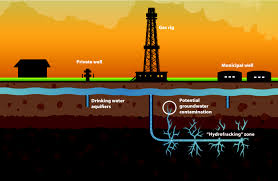
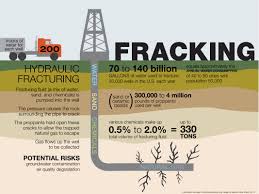
Fracking, also called hydraulic fracking, is the process in which chemicals and water are injected at high pressure deep into the ground to release fossil fuels and natural gas.  There are many consequences to this process 2that have both negative and positive results.  The positive result is that we have found a temporary solution to running out of fossil fuels.  The negative outcomes can include contaminated drinking water, dangers to the health of the community that surrounds the fracking site, and fractures in the ground which weakens the soil and can lead to more frequent earthquakes. The effects of contaminated drinking water include sensory, respiratory, and neurological damage.

Fracking was first discovered during the Civil War in 1862. During the Battle of Fredericksburg, Col. Edward A. L. Roberts saw that when artillery was fired into a narrow canal oil would release itself. He called the process tamping. In 1865 Roberts patented his idea and created the “Exploding Torpedo”. This invention increased production by twelve hundred percent 1and planted the gateway for modern hydraulic fracking. However it wasn’t until the 1940’s when the birth of modern fracking became evident. In 1947, Floyd Farris began a study viewing the relationship between oil and gas production output and the amount of pressure used on each well. This study led to an experiment testing the effects of pressurized water in the ground. Though this experiment failed, it paved a gateway for modern hydraulic fracking which occurred in the 1990’s.

The process of fracking began when George P. Mitchell created a new technique in the 1990’s. This process combined hydraulic fracking with horizontal drilling. The process begins underneath the surface where rocks and shales hold gases in their pores. Fracking moves these resources from the pores to production wells. Horizontal “veins” or wells move these gases at high pressure and eventually causes either the gas, oil, or water to be released and stored in the storage tanks.

Fracking can also cost communities expensive maintenance bills. Methane gas and toxic chemicals are released from the ground and can contaminate the water. Contaminated water can be expensive to clean, but it depends how vast the contamination has spread. Fracking requires an extensive amount of resources to cause the natural gas to surface, about 1– 8 million gallons of water and about 40,000 chemicals.  These chemicals include lead, uranium, mercury, ethylene glycol, radium, methanol, hydrochloric acid, and formaldehyde.

Not only does fracking cause environmental disasters, it also has adverse health effects. On a normal day, worrying that your water is safe to drink is not typically your main concern.  Well, if you were living close to a site where an oil company was fracking for natural gas you probably would not be able to drink your tap water.

Written by: Lily Michaud, Mia Genuario, Lindsey Mongan