Football and Agriculture

When we are watching a football game, we hardly notice the flawlessly colored and cut grass the players trample over and over, much less do we think about the grueling hours spent on making that turf free of any imperfections. Never would I have thought that there would be entire research facilities dedicated to making turfgrass upkeep more eco-friendly and less labor-intensive. That is until last Monday, when my classmates and I were completely blindsided by a surprise field trip to the Virginia Tech Turfgrass Research Center planned by Dr. David Haak. 

During the course of this trip, we learned of all of the technologies they were developing in order to find a happy medium between convenience and sustainability. Dr. Haak and his colleagues showed us two drones in the early stages of development. One small white one, used for imaging, and one huge one with a giant tank attached to the bottom, used to spray substances such as fertilizer and “plant medicine”. We were taught the importance of precision when administering these substances to fields as large as the ones we see on TV so as to not use more product than needed. Although these drones were far from finished, they were still able to perform impressive tricks like navigating the field without the help of their handlers and sending streams of water down towards the class from 20 feet in the air. So, next time you are watching your favorite sports team on television, instead of rooting for the players, root for the scientists behind the ground they are playing on. 

-jg

Controlled Environment Agriculture

Living on the edge of the D.C. suburbs. Most people don’t think about agriculture too much. But when you look a little closer at your surroundings you begin to notice quite a phenomenon. Suburban sprawl has eaten up much of the agricultural land in order to support a growing population, yet that land can no longer be used to support a growing population’s demand for food.

This problem was brought up by Professor Evans, the Director of the Virginia Tech School of Plant and Environmental Sciences, during a lecture he gave to us Gov School students. The solution to this problem, which I had also stumbled upon during my global seminar research, was controlled environment agriculture (CEA). Vertical Farms,Greenhouses, and other enclosed environments that utilize hydroponics, aeroponics, aquaponics, and aquaculture for the purpose of reducing and optimizing the use of water, energy, and space qualify as CEA. I did not realize until Professor Evans had mentioned Greenhouse CEA, that I actually had experience in CEA. Through my sophomore engineering class, I led a group of fellow students in researching our school’s greenhouses’ drip irrigation system. After weeks of collecting data and collecting tests on water pressure, drip speeds, and the zoning software that controlled watering, we gave a presentation to the plant science department.

Through my experience with the project, I was able to see the drastic difference in water usage between traditional watering systems and drip irrigation systems. It felt great having successfully managed and completed an agricultural engineering project that would actually help better our school’s teachers and students’ understanding of our greenhouses. Now, as the 2021 Virginia Governor’s School for Agriculture comes to a close, it is great to see how the content we learned this summer can better equip our ability to combat the problems of the future.

-BL

Manure and Innovation

The smell of manure and hay surrounds me as I start on my last stall of the day. Small calluses begin to form while my fingers grip the wooden pole of the pitchfork. As I finalize my daily barn chores for my job at the local horse barn, I think to myself, “there must be another way!” Each day I spend what it seems like hours, mucking out pounds upon pounds of horse manure. As my wheelbarrow grows heavier, I think about how I am going to dispose of this. Grasping both handles I make my way down to the manure pit with fifty pounds of muck.

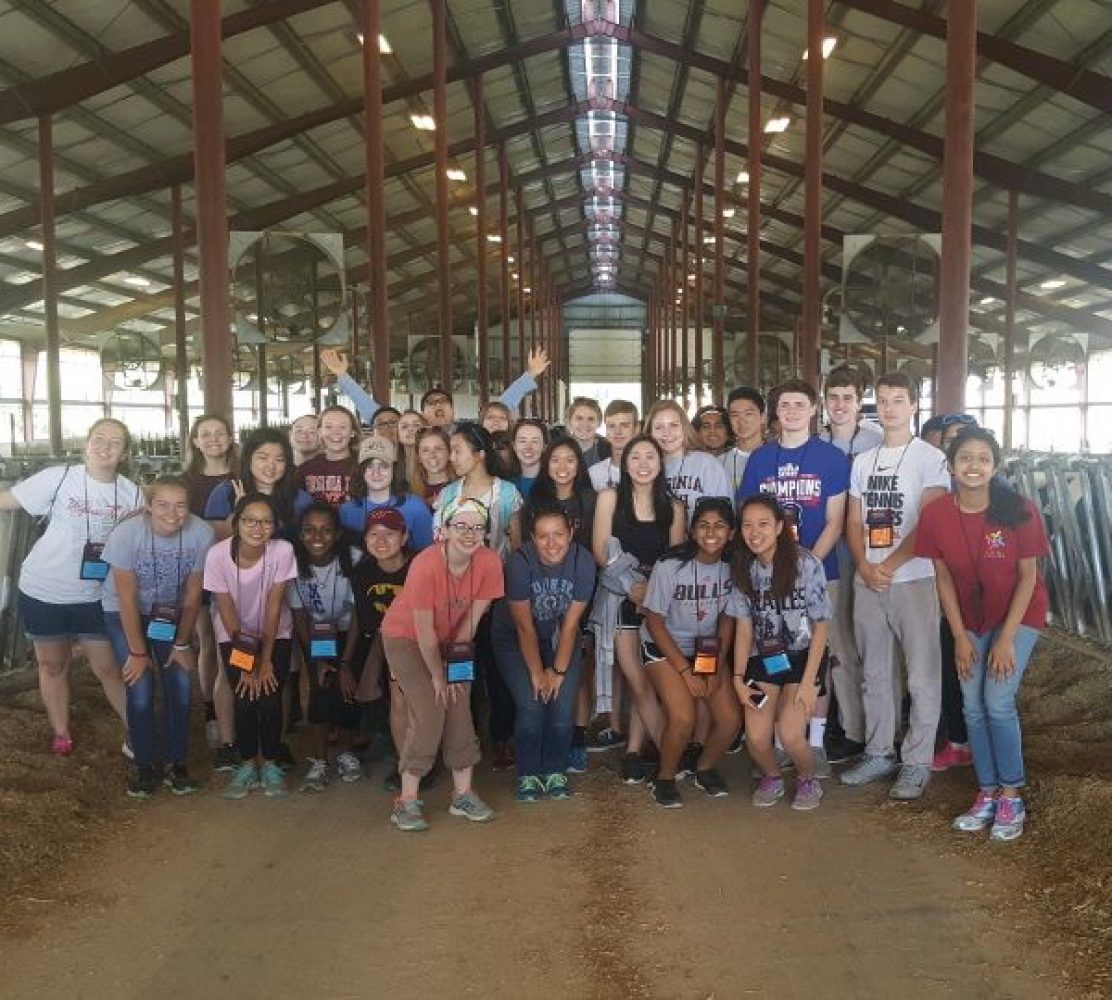
   On a sunny afternoon, miles away from the barn, I visited the cattle farm at Virginia Tech. I couldn’t help but believe my eyes with what I saw; as the man pulled the lever a gushing swarm of water came spilling out the side sweeping up all manure. The mixture of manure and water rushed underneath the cows’ feet and out back behind the barn. The manure was then separated into liquids and solids so the farmers could dispose of it properly. This system allowed for a labor free and fast-acting cleanup that prevented odors and diseases from spreading. 

   This innovative technique was nothing like I had ever seen. If all farms could utilize this, there would be a slim chance that animals would develop a sickness from standing in muck for an extensive time. That day I left the cattle farm with a new idea on how the innovation in agriculture at Virginia Tech could impact farmworkers everywhere.

– J.L

Agriculture: More than Cows and Corn

As embarrassing as it is to say, I did walk into Governor’s School for Agriculture (GSA) believing the topic solely consisted of farms just overflowing with cows and corn. You could say I faced a bit of a reality check the first week, and by the final week I am utterly embarrassed by the little I knew only a short few weeks prior regarding the industry feeding the world. 

I have learned from professor after professor that agriculture is interconnected with every other topic you could imagine. The days of the small, subsistence farming family are long gone and have been replaced by an industry on the forefront of economic, environmental, and technological innovation. GSA has completely obliterated all the misconceptions of agriculture I held on to for so long and shined a light on the constantly advancing subject I had left in the dark.

At home I believed my only connection with agriculture was the work I did in the miserable hot sun of my school garden. While I am returning with a mountain of ideas to improve that garden, I am also coming back with an understanding that everything I wear, consume, and use in my everyday life is connected with the agricultural industry that–to my surprise–is not just cows and corn. 

-vk