A New View of Agriculture

My first experience with food production on a larger scale than you would see in a home was kind of a negative one. I worked in a chocolate shop that was tucked in the back corner of my town with a really eccentric boss. My second month into the job, she walks out of the storage room with a plastic Tupperware full of gray dust and promptly announces, “Someone must have been tidying because I just found Allen with the chocolate!” Allen was her recently cremated brother whose ashes she was keeping in an old plastic soup container.

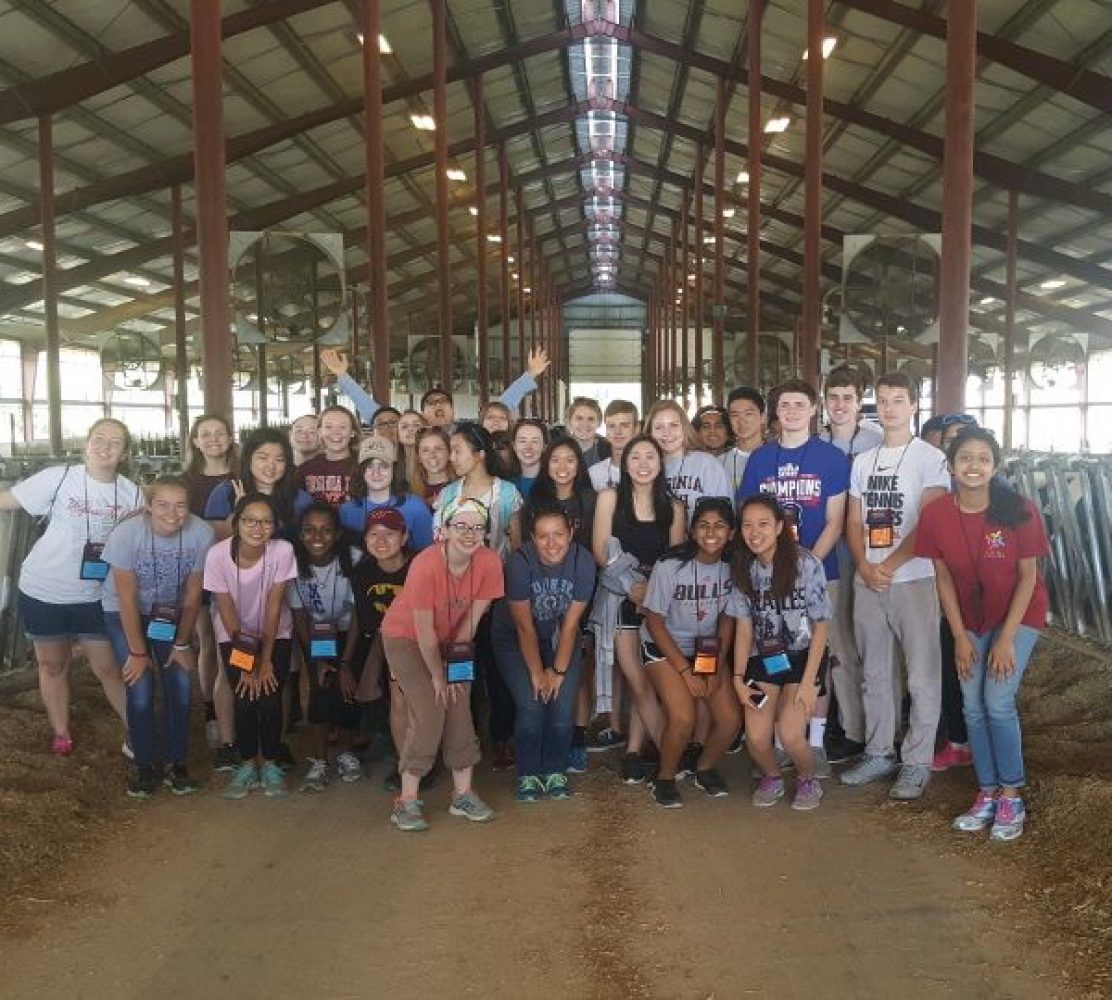
Governor’s School has been wildly different. First off, there have been no incidents that would make a health inspector’s eyebrows go up. Secondly, I have gained a deeper understanding of where our food comes from. The visit to Homefield Farms to see how food is grown and processed showed me that farming is a lot more than the antiquated idea I had of it before. I learned that for harvested plants to keep, they have to be plunged into cold water to remove the field heat, or they will spoil before they reach their destination. I learned about trap crops and how they are planted at the perimeter of fields to attract bugs away from the desirable plants. Most of all, I became more conscious of how much time and effort goes into each vegetable that we eat, each piece of fruit, each animal product.

Agriculture is so much more advanced and involved than people think, and Governor’s School has shown me that.

-td
D2: Making Life Sustainable at GSA

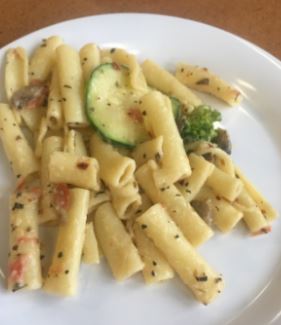
D2. Our beloved and only dining hall. Life at GSA would be unsustainable without it. My personal sustenance comprises of pizza, dessert, and predominantly vegetables.

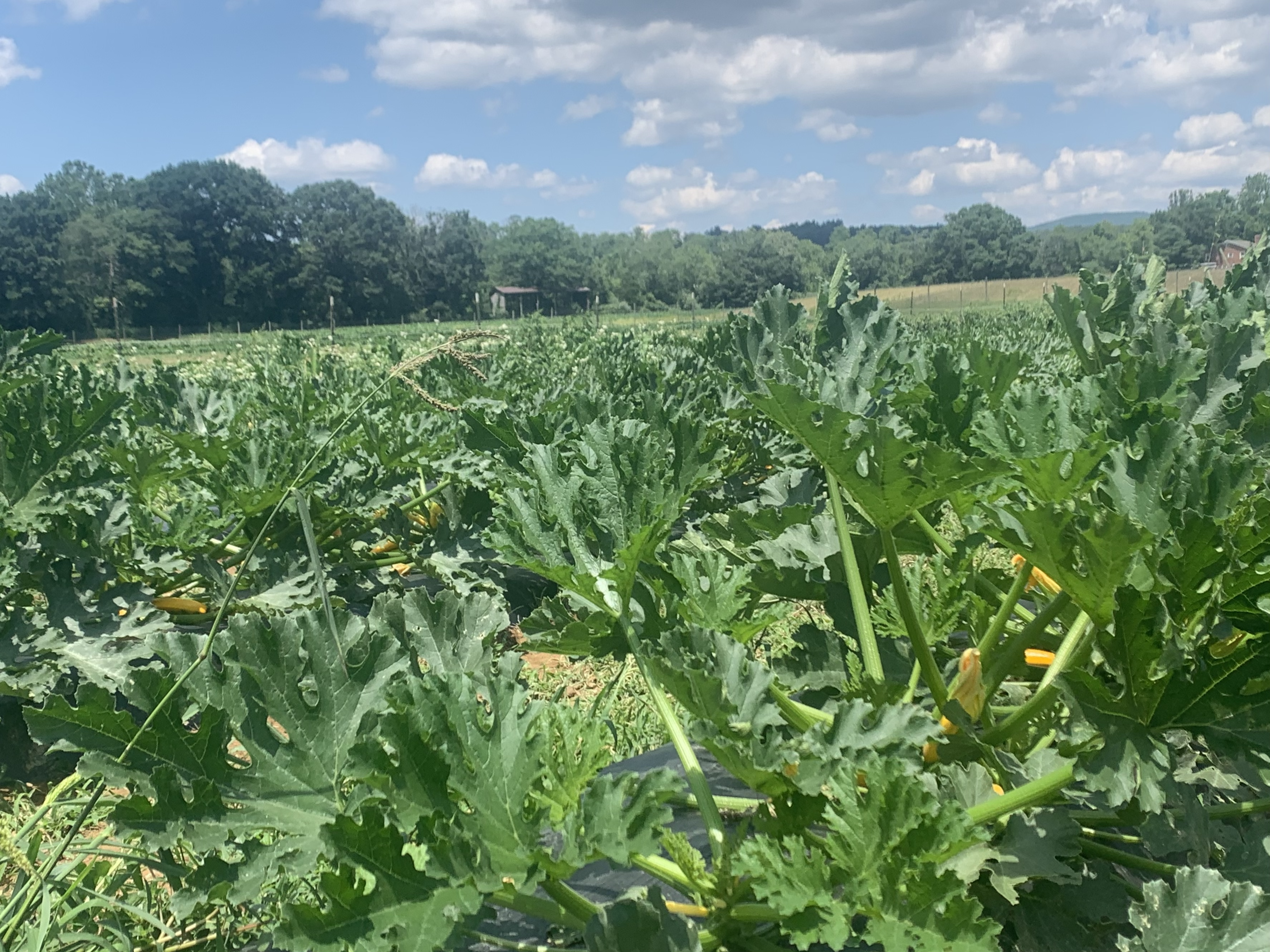
One of our recent class trips was to Homefield Farms, where we explored the importance of crops and techniques in sustainable agriculture. We had the opportunity to see many machines and equipment used to farm, but also to learn about different cover crops and methods to grow seedlings. This includes plasticulture, which was used for the production of their peppers. Plasticulture focuses on using plastic to maintain soil temperature, retain moisture, and limit weeds. Many of these peppers and other vegetables including squash, zucchini, and basil are also served to students here at Virginia Tech in their meals at Dietrick Hall.

This experiences spiked my interest and considerations towards the food I eat, where it was made, and how it was grown. This learning concept also applies to the good ol’ reliable choccy milk for many of my fellow classmates here at governor’s school, where even much of our milk is locally sourced from the dairy farm. My recent discoveries will never be forgotten like much of my time spent here, and I will continue to search for these connections in the real world, always in touch with agriculture!

-ma

A Mooooving Field Trip

I am an animal lover through and through. That’s part of the reason why I chose to apply for Governor’s School of Agriculture; I knew that I would get the opportunity to learn about domesticated livestock and fowl. Although we have yet to reach the point in our month-long stay where we will learn about animals in agriculture, I was pleasantly surprised when I found out that a little over a week ago, on July 2nd, we were going to be visiting a dairy farm.

I spent the entire morning itching to get on the van, and many others around me were vibrating with the same excitement. Our first stop on the field trip was an organic farm. Even though I enjoyed learning about the types of machinery and methods used to get the best harvest, I couldn’t help but run back to the van when it was time to head to our final stop: the dairy farm.

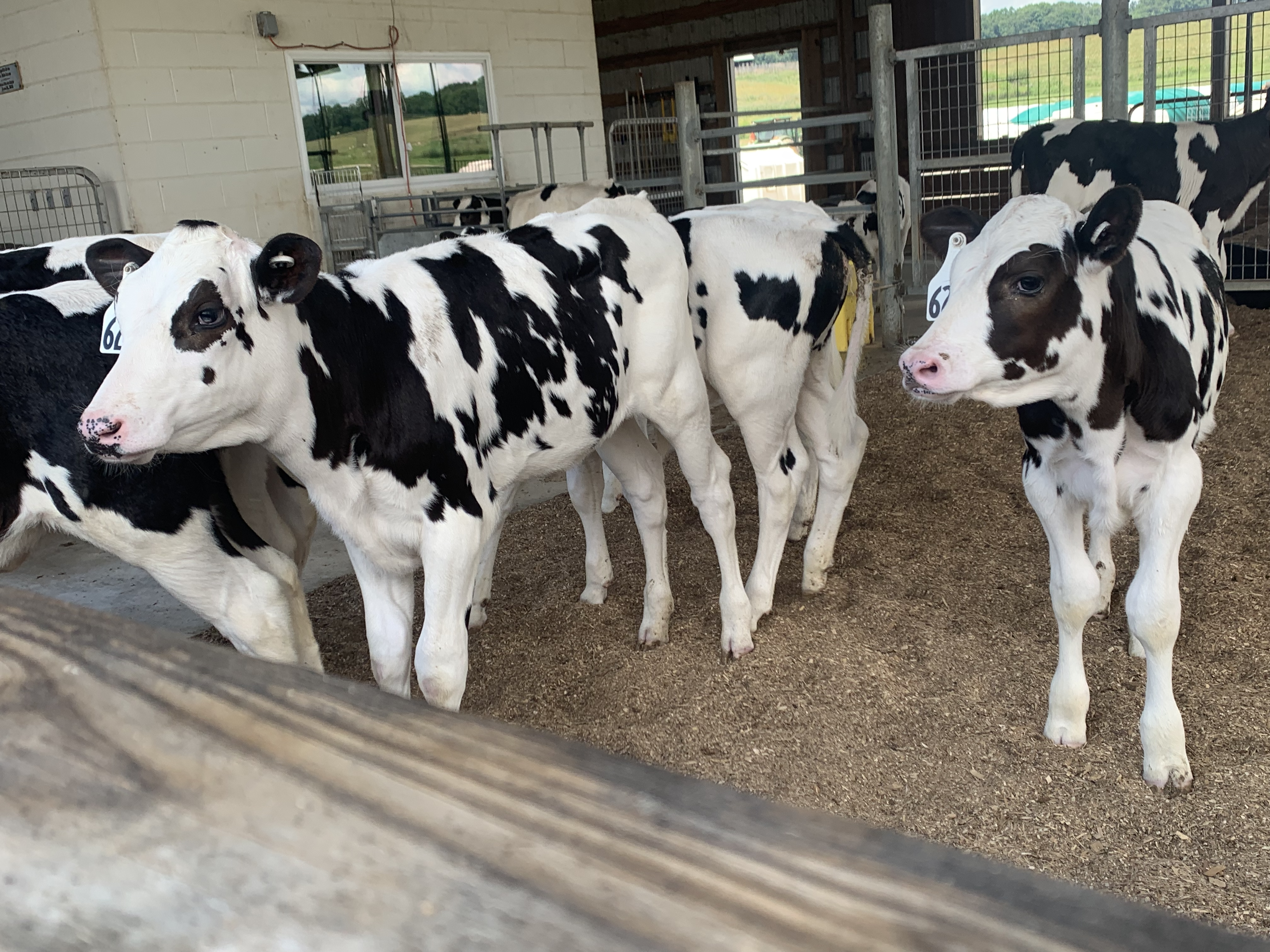
When we arrived, I was hit by the distinct smell of manure, grain, and hay. I spotted the cows immediately; their big black-and-white (and occasional brown) heads poking out of their pens and eying us curiously. I wanted nothing more than to run over to them, but not long into our tour, we were led to a barn that housed the calves. They were all legs and heads that were too big for their little bodies, and I fell in love. We spent the next hour learning about the details of dairy farming, including how the cows were cared for, how the milk was collected, and then the process in which the milk gets stored.

Although we’ve done plenty of exciting things since then, the cows were by far the highlight of my stay (so far) at Virginia Tech.

-ap

Tillage: A sustainable agriculture practice

Earlier this week we were challenged with the task of coming up with a form of sustainable agriculture practice that is applicable for a global scale. My group chose to research and talk about tillage. We were given a small amount of time to come up with as much information as we could about the topic, and then we were to present our findings in front of our peers. I for one do not like having to speak in front of a group of people, but for the sake of the assignment and my groups mates, I went ahead and I did it anyways.

We were able to find quite a lot about the topic of tillage and how it affects farmlands. We focused on the natural, well-being, economic, and societal aspects of the topic. Before we could start researching for these specific factors we had to understand the different parts of the sustainability compass: nature, society, economy, and wellbeing. With this, my group mates and I found out that there are plenty of cons compared to pros when it comes to the topic of tillage. One of the main cons was that tillage can cause a lot of soil loss. A source states that no-till or reduced till methods, which involve inserting seeds directly into undisturbed soil, can reduce erosion and improve soil health.

-mc