Robotics and Agriculture: The Future of Precision Farming

When you hear the word ‘agriculture’, robotics is not what usually comes to mind. However, the truth is that technology and agriculture are deeply intertwined. Last week, the latest advancements in drone technology and artificial intelligence were shown to Governor’s School for Agriculture students, myself included.

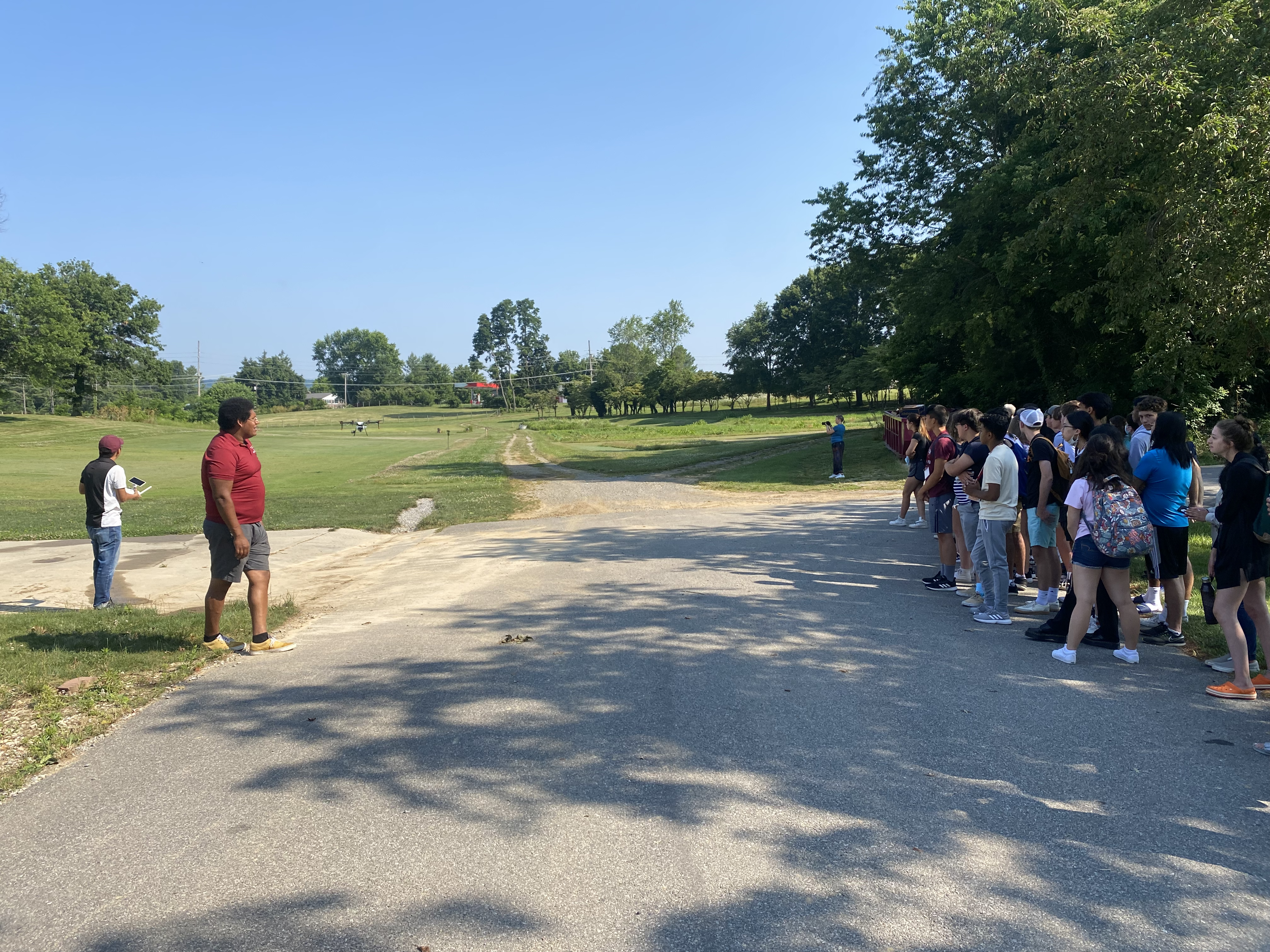
Dr. David Haak and his PhD students presented their work. A massive drone with seven helicopter-like blades rose above our heads almost effortlessly, sending a cloud of dirt across the field. This drone could not only take pictures of the land below, but could be instructed to spray specific sections of it with water, fertilizer, dye, and more. With additional GPS tracking and infrared cameras, the drone could also monitor the health of the land below. What does this mean for the future of agriculture?

Drones and other robotics are being used in what is known as precision agriculture, which uses high tech satellites and other machines to manage specific parts of agricultural operations. Instead of spraying an entire crop with pesticides or water, these new drones can be programmed to spray the areas that need it. As a result, much less material is used while still gaining the desired effect. While this technology is too expensive for minor operations, industrial farms can use it to create more sustainable productions and save valuable resources. The future of farming is precision agriculture, and these drones are leading us there.

-om

Durham’s Dirt Diggers (No Offense, Soil)

Tim Durham, a professor of plant science, spoke to us about the ecstatic skin of the Earth: soil. Now, when you think soil, you think dirt. However, Durham made it very clear to us that soil is not dirt. Not very exciting, right? You could never be more wrong. Durham made soil exciting. Motivational even. To the point where one of my friends emailed him to ask about something, we learned (plasticulture on farms) after Durham left. Throughout the week we learned that soil classifies into three textures: sand, silt, and clay. Needless to say, we experienced a particular soil texture and its properties in full.

One day, it poured. It rained and Blacksburg seemed as though a bucket of water was dumped on its head. However, our volleyball tournament, the opportunity for us nerds to show off our athletic prowess, was on Sunday. We had close to zero experience when it came to volleyball excluding what we had learned from TV. Durham taught us about the porous nature of sand and its ability to not absorb water. We found out he was too right when we showed up to the court and found our practice ruined. We found a puddle, the size of a lunar crater, in center court. Did this stop us? Of course not, that would be logical. So we played in the water and furthered our skills. 

Sunday came and we experienced sand with five senses. We ate sand. Literally and figuratively. Throughout our 3-day practice for the tournament that would forever change our lives, we made it our mission to point out the different types of soils that surrounded us such as the illustrious sandy loam and crafty clay silt loam. We had a blast learning about soil and experiencing it in full too.

-sg

Utilizing Lime to Enhance Soil Health

It was a summer morning so I decided to wake up early so I could do my chores before it got too hot. As I began my walk to the barn I noticed a cloud like dust starting to settle over the main paddock. It looks almost snow-like in nature but considering the summer heat it most definitely was not.

A farmer spreads lime on a field.

I heard the distant humming of my dad’s tractor grind to a halt so I decided to go up to his wood shop to ask him. Once I got up to the shop I called out his name and he turned his head to see what I wanted. I proceeded to ask him about all the white stuff on fields and he told me it was lime. I was confused so he explained how he spreads it on the field to help the grass grow for the horses.

Years later I am now at Governor’s School for Agriculture and I now know the importance lime has to soil health. In Dr. Tim Duham’s lecture we learned about the importance of lyme and how it can be used to reduce acidity within the soil since soil genuinely becomes more acidic over time. Soils pH should be around 6.3 for crops to grow the best and spreading lyme can help reach that value.

After learning this new information about soils and growing I hope to use it to improve my gardening skills back home. 

-sc

Thoughts about Sustainability and Economics in the Dairy Industry

Open pastures, green grasses, quiet trees, blue skies, and grazing cows – that’s what I envision when I think of ideal agriculture. My research over the years has exposed me to the stark reality of the agricultural industry. The goal is to feed as many people as possible by using economically friendly methods. This mindset/goal often disregards the sustainable, moral, and environmental aspects of production. 

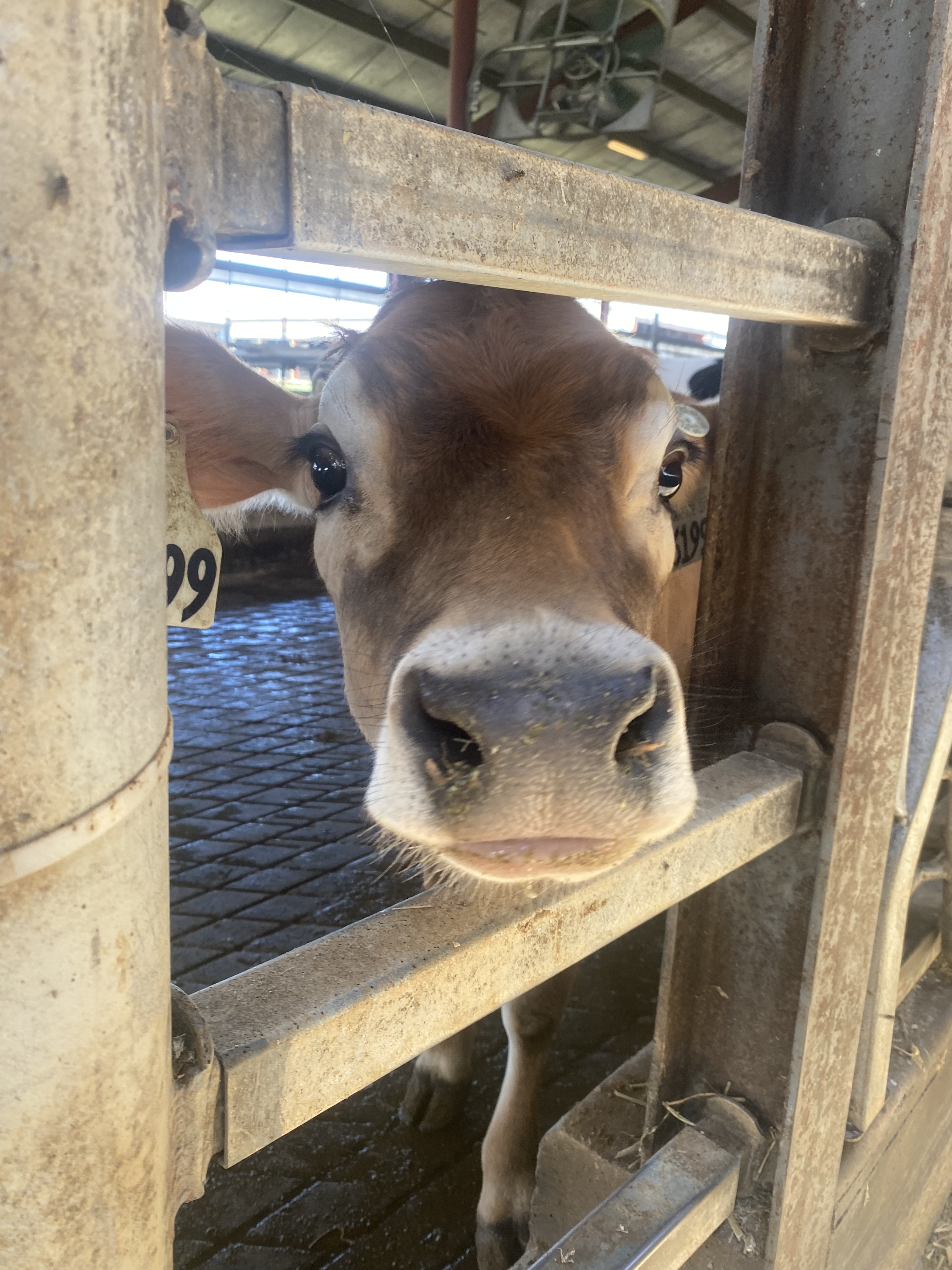
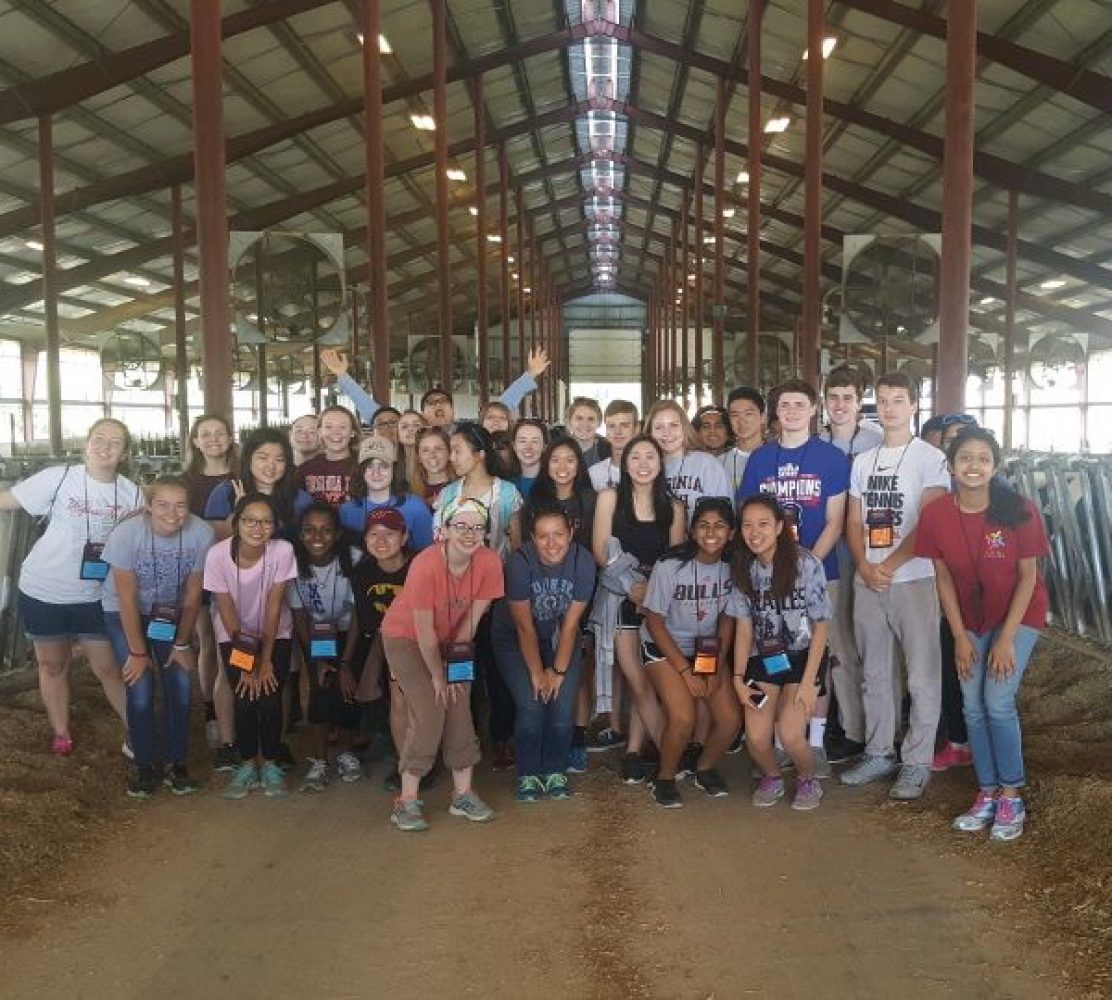
I regularly visit an eco-dairy farm in Pennsylvania that focuses on ethical and sustainable farming, but I never visited a conventional commercial dairy farm. On my first week of GSA, we visited VT’s Kentland Farms. We toured the dairy science complex and learned about the recycling programs, how the cows are bred, what the cows are fed, and the technology that’s used in dairy production. I thought that the sand recycling program was very interesting because it helped keep the barn relatively clean, and it was economically and environmentally friendly. I also liked the milking parlor because it was very quick and efficient. I understand that Kentland’s practices are good economically but one could argue that they are not sustainable. Amy Quinton from UC Davis stated that “Cattle are the No. 1 agricultural source of greenhouse gases worldwide.” They contribute more greenhouse gases than the transportation industry! Cattle and dairy farming is not very sustainable, especially in the future. The resources that go into raising cattle (producing beef and dairy) such as water and wheat could be better spent on directly feeding the human population. It would also be more environmentally friendly. 

In the future, I hope that we can focus on the ethical aspects of livestock production such as giving them more space and a less stressful environment (these two factors could potentially produce more dairy and reduce the livestock’s environmental impact). I also hope that we can spend more time researching sustainable farming practices that reduce cattle/livestock production and increase crop farming.

-mn